





How to Build a Screen-Free Bedtime Routine (That Kids Actually Follow)
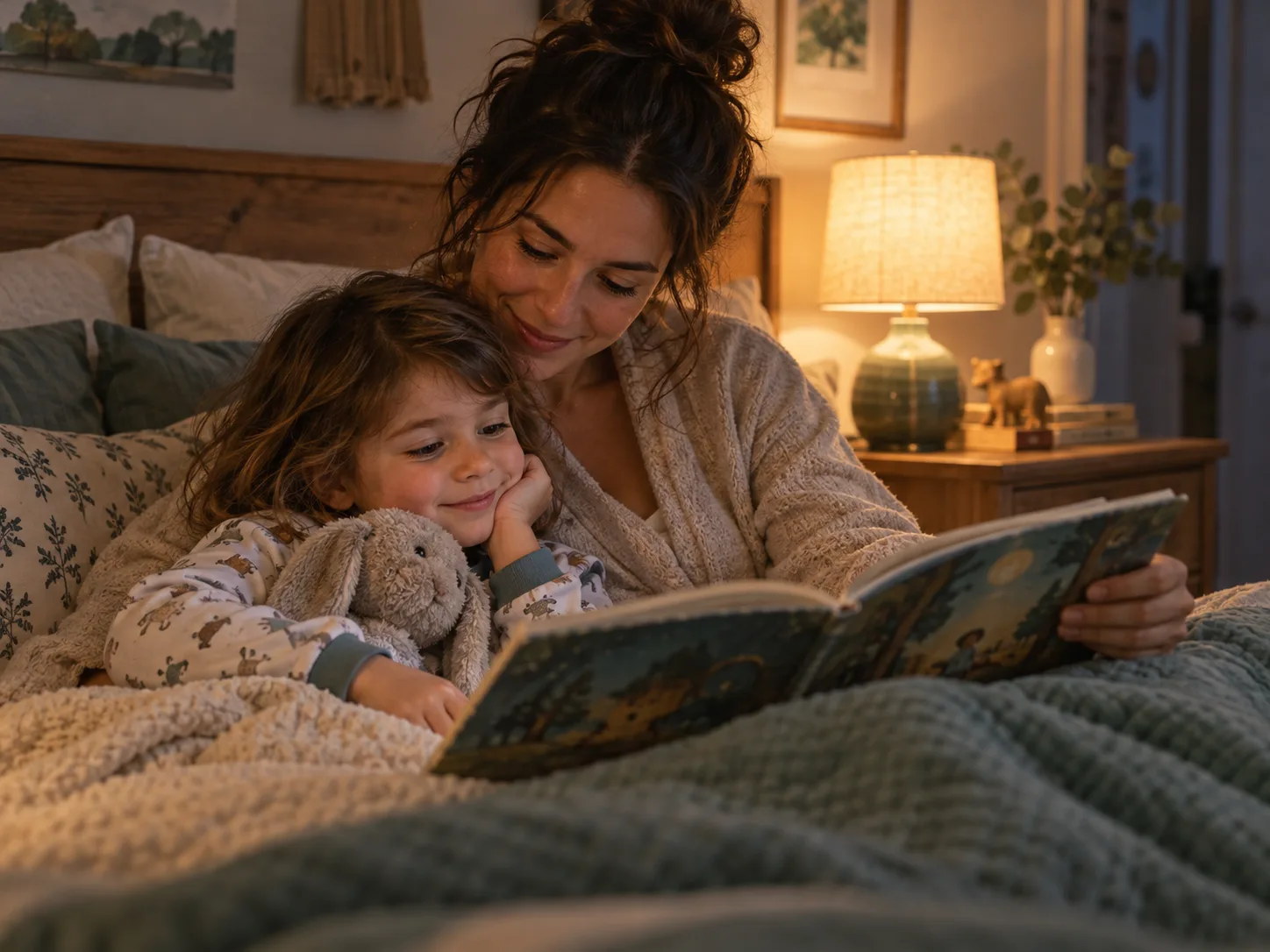
Short answer: Turn screens off at least an hour before bed, as the American Academy of Pediatrics recommends, and keep them out of the bedroom. Then repeat the same few calm steps in the same order every night: bath, pajamas, teeth, a book or audio story, a short chat, lights out. Give it some consistent nights before it sticks.
Why screens make bedtime harder
The AAP’s advice is simple: avoid screens for the hour before bed, and keep phones and screens out of your child’s bedroom at night (AAP). The reasons it gives: screens can raise heart rate and interfere with melatonin, the hormone that helps the body get ready for sleep.
The AAP also notes that children with more media exposure, or with a TV or device in the bedroom, tend to fall asleep later and sleep less (HealthyChildren.org).
There’s a practical side too: shows are designed so you want the next one. Ending on “one more episode” is a fight almost every parent knows. A routine moves that fight to a calmer moment, an hour earlier, and replaces the show with steps your child can predict.
How much sleep are you protecting? WHO recommends 10–13 hours of good-quality sleep (naps included) for 3–4 year olds (WHO), and the AAP recommends 9–11 hours for children 6–13 (AAP).
Blub plays one 15-minute science story at bedtime and stops on its own. The screen stays off; your child just listens. Ages 4–9 · Get Blub: Kids Podcast & Stories
The 60-minute screen-free routine
Here’s a routine for an 8:00 p.m. lights-out. Shift every time by the same amount for your bedtime.
| Time | Step | Why it helps |
|---|---|---|
| 7:00 | Screens off for everyone in the room. Give a 5-minute warning first. | Starts the AAP’s screen-free hour |
| 7:05 | Tidy-up song: toys back in the basket | A clear “the day is ending” signal |
| 7:15 | Bath or quick wash | Calm, warm, predictable |
| 7:30 | Pajamas and teeth | “Brush, book, bed,” as the AAP puts it (HealthyChildren.org) |
| 7:40 | Book together, or an audio story with lights low | Reading together is what WHO encourages for quiet time |
| 7:55 | Two-minute chat: “What was the best part of today?” | Connection instead of negotiation |
| 8:00 | Lights out, same words every night | Repetition is the point |
Keep the order the same even when the times slip. The sequence matters more than the exact minutes.
Adjusting it by age
Ages 2–3
- Keep it shorter: fewer steps between screens-off and lights-out.
- Use a picture chart so your child can “check” each step.
- Offer two choices, not open questions: “This book or that book?”
Ages 4–6
- Give them a job: choosing pajamas, turning off the lamp, starting the story.
- Add a “tomorrow” moment: one thing they’re looking forward to.
- Keep the 60 minutes screen-free for the whole household where you can; kids notice when a parent is scrolling.
Ages 7–9
- Let them own the chart and time themselves.
- Reading alone can replace reading together some nights, but keep the chat.
- Devices charge outside the bedroom. Make it a family rule, not a punishment.
10 screen-free wind-down activities
Try it at home
- Picture book, same one twice. Many kids love hearing the same story again.
- Audio story or podcast with the screen off (more below).
- “Rose and thorn”: best and hardest part of the day.
- Stretch like animals: cat, frog, sleepy bear.
- Shadow puppets with a flashlight.
- Quiet drawing at the kitchen table before bath.
- Tomorrow’s clothes: lay them out together.
- Breathing game: smell the flower, blow out the candle, five times.
- Tell a story together: you start one sentence, they add the next.
- One curious question: “Where does the sun go at night?” Save the answer for breakfast.
When your child asks for “one more show”
Most bedtime battles are decided before they start. Three things help:
Decide the answer in advance. If the rule is “screens end at 7:00,” then 7:05 isn’t a negotiation; it’s the rule.
Name the feeling, keep the limit.
“You really wanted to see what happens next. It’s hard to stop. The show will still be there tomorrow. Now it’s bath time.”
Offer a choice inside the routine, not about it.
“Do you want bubbles or no bubbles tonight?” “Should the bear or the rabbit come to bed with us?”
If your child has relied on a show to fall asleep for a long time, change one thing at a time: first move the show earlier, then shorten it, then replace it with an audio story. If sleep problems continue or you’re worried, talk to your pediatrician.
A scenario: Say your 5 year old asks for “one more episode” every night at 7:00. On the first night, give the 5-minute warning, let the episode finish, then walk to the bath together and start the checklist. Expect some protest, and repeat the same calm sentence each time. On the nights after, keep the checklist on the bathroom door so your child can see what comes next. Some children adjust quickly and others take longer; what helps is doing it the same way every night.
Audio stories and podcasts: a screen-free middle ground
An audio story isn’t screen time in the sense WHO describes, which is watching TV or videos and playing games (WHO). It keeps the screen off during the hour the AAP asks you to protect.
Two honest caveats:
- It’s not the same as reading together. Keep the book and the chat. Audio works best as the last step, or as a replacement for the show that used to be there.
- The device matters. If a phone plays the story, start it yourself, lock the screen, and leave the phone outside the bed. Pick audio that ends on its own, without autoplay into the next episode.
That last point is why we built Blub the way we did. (We make it, so weigh our view accordingly.) Each night it plays one science podcast of about 15 minutes, then stops. The next morning at 6:30 a.m., a question about the episode arrives for breakfast. There are 8 series, from planets and the human body to volcanoes and how the internet works.
Printable: Bedtime Routine Chart
My Bedtime Routine · Name/drawing: ……… ☐ Screens off (7:00) ☐ Toys in the basket ☐ Bath ☐ Pajamas ☐ Brush teeth ☐ Book or story ☐ Best part of today ☐ Lights out (8:00) Times can be written in by parents. Space for a sticker per step.
Coming soon: we’re illustrating this chart with Blub’s characters. Leave your email and we’ll send the printable when it’s ready. Notify me
Make the last step easy: One ~15-minute science story, then silence. Blub for ages 4–9, with a breakfast question at 6:30 a.m. Start the 7-day trial
FAQ
How long before bed should screens be off? At least 1 hour, according to the AAP. It also recommends keeping phones and screens out of the bedroom at night.
Are audio stories OK at bedtime? Yes, as long as the screen stays off and the story ends on its own. They work best alongside, not instead of, reading together.
What if my child can’t sleep without a show? Change it in steps: move the show earlier, shorten it, then swap it for an audio story in the same spot in the routine. If sleep problems continue, talk to your pediatrician.
What’s a good bedtime routine for a 4 year old? Screens off an hour before bed, then bath, pajamas, teeth, a book or audio story, a short chat and lights out, in the same order every night. WHO recommends 10–13 hours of sleep a day for 3–4 year olds, naps included.
Sources
- American Academy of Pediatrics. Is screen time affecting my child’s sleep? https://www.aap.org/en/patient-care/media-and-children/center-of-excellence-on-social-media-and-youth-mental-health/qa-portal/qa-portal-library/qa-portal-library-questions/screen-time-affecting-sleep/
- HealthyChildren.org (AAP). Healthy Sleep Habits: How Many Hours Does Your Child Need? https://www.healthychildren.org/English/healthy-living/sleep/Pages/healthy-sleep-habits-how-many-hours-does-your-child-need.aspx
- HealthyChildren.org (AAP, 2023). Constantly Connected: How Media Use Can Affect Your Child. https://www.healthychildren.org/English/family-life/Media/Pages/adverse-effects-of-television-commercials.aspx
- World Health Organization (2019). Guidelines on physical activity, sedentary behaviour and sleep for children under 5 years of age. https://www.ncbi.nlm.nih.gov/books/NBK541173/
Related
This article is for general information and isn’t medical advice. If you’re worried about your child, talk to your pediatrician.

Blub Editorial Team
The Blub Editorial Team is the team behind Blub Kids’ science podcasts for children. We base our articles on WHO, AAP and other primary sources, and we check AI-assisted drafts against those sources before publishing. We don’t give medical advice.
How we write our guides →

