





What Should My Child Do if a Stranger Contacts Them Online?
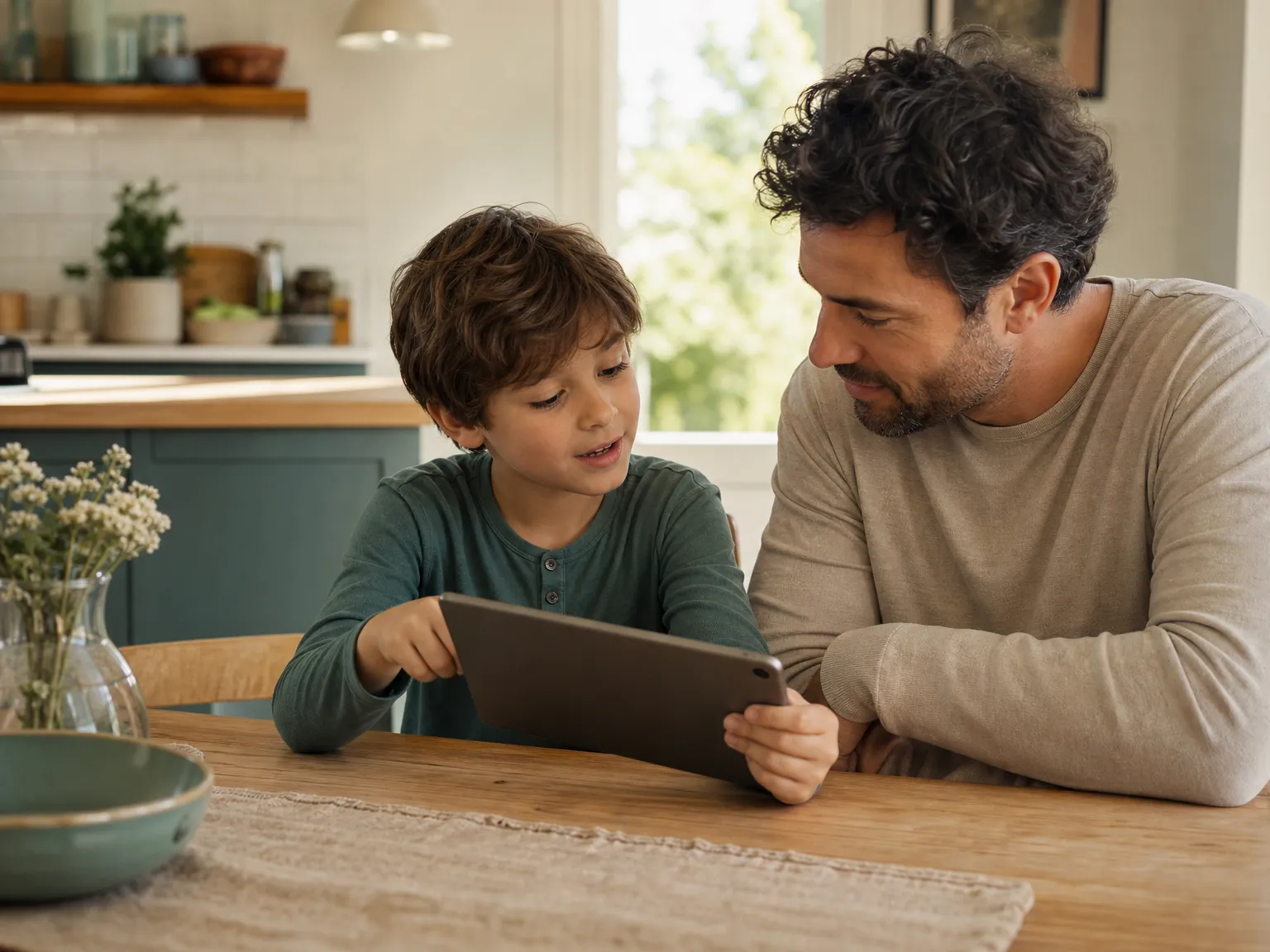
Short answer: Teach your child to stop replying and tell you or another trusted adult when someone they do not know contacts them online. They should not share personal information, follow the person into another conversation, or arrange to meet. Stay calm, reassure them that asking for help will not get them in trouble, and handle blocking, reporting and safety checks together. If you believe your child is in danger, contact local emergency services or child protection support immediately.
A message can arrive during an ordinary game: “Want to join my team?” Your child may feel pleased, confused or worried about seeming rude. They need a response they can use without deciding whether the sender is dangerous.
This guide is for parents of children roughly three to twelve who use connected games, apps or shared devices. It does not recommend giving young children access to open chat. For younger children, adults should manage contact settings and respond to messages themselves.
Give your child one simple routine
Try the words “Stop, step away, tell.” Explain each part before anything happens:
- Stop: Do not reply, accept the invitation or click a link. No goodbye or explanation is required.
- Step away: Stop using the conversation. Put the device down or come away from the screen; there is no need to stay and investigate.
- Tell: Find a trusted adult and say, “Someone I don’t know messaged me.” If that adult is unavailable, go to another adult you have named together.
The American Academy of Pediatrics’ multiplayer gaming guidance advises children to play with people they know, avoid sharing personal information, tell parents about stranger contact, and never meet someone they know only online.
Make “personal information” concrete: their full name, school, address, phone number, location and passwords. UNICEF’s online safety guidance also cautions that people can pretend to be someone else. A friendly profile picture or a claim to be another child does not establish who is behind an account.
Say: “You don’t have to prove someone is bad before you ask me. If you aren’t sure, we can check together.”
When your child shows you a message
Start with reassurance
Pause before reacting. Try: “Thank you for bringing this to me. You’re not in trouble for telling me. Let’s work out what happened.”
UNICEF’s guidance on negative online experiences recommends listening calmly and avoiding blame. It warns that immediately taking away internet access can feel like punishment and discourage future disclosure.
You may still need to stop an unsafe conversation or temporarily disable a feature. Explain the reason: “I’m turning off messages from unknown people while we check the settings. You can still come to me about anything.”
Ask enough to understand the situation
Let your child explain in their own words. Start with “Can you show me what happened?” rather than a string of accusations. Useful follow-up questions include:
- “Do you know this person away from the game?”
- “What did they ask you to do or send?”
- “Did you share anything or make a plan to meet?”
- “Is there something about this that worries you right now?”
If they have already replied, keep the same calm approach. A child who sent a message still needs help ending the contact. Do not ask them to keep chatting so you can test the person’s intentions.
Record the concern, then use the safety tools
For an ordinary unwanted message, review the account and help your child block the contact. If the message is threatening, inappropriate or repeated, use the platform’s reporting tool too. Blocking and reporting are separate actions; look at what each does in that app.
Before deleting an ordinary text exchange you may need to report, note the username, platform, date and relevant messages. UNICEF recommends preserving evidence when reporting an incident. Keep it private rather than posting it publicly or circulating it among parents. If sexual material involving a child is present, contact police or child protection services for guidance on reporting it safely.
Your child does not need to repeatedly look at upsetting content while you deal with it. Explain the next step and let them move away from the screen.
Use behavior as a warning sign, even with familiar contacts
“Stranger” is a useful starting word, but it is not the whole safety rule. UNICEF notes that children often know the person responsible for online harassment or abuse. The same tell-an-adult routine applies to a classmate, a familiar player or someone the family knows.
Give your child examples that should bring an adult into the conversation: someone asks for private information or pictures, wants a meeting, threatens them, makes them uncomfortable, or asks them to hide the exchange. A request to move to a private chat is also something to check with you before agreeing. These are reasons to stop and get help; your child does not need to assign a label to the behavior.
You could rehearse this invented exchange together:
Child: “They helped me win. They said I can get a special item if I message them somewhere else.”
Parent: “I understand why the item sounds exciting. We don’t know who that person is, so don’t send another message. Let’s look at the contact settings together.”
Child: “But I already said yes.”
Parent: “You can change your mind. You don’t owe them another reply. I’m glad you showed me.”
Match the plan to your child’s age
These age bands are practical adaptations, not birthdays at which independent chat becomes safe. Follow the service’s age requirements and your child’s understanding. Both the AAP and UNICEF recommend stronger adult management for younger children and increasing involvement in safety decisions as children mature.
Ages 3–5: Choose activities without open communication with other users. Manage the account yourself and stay involved if your child uses a connected device. Practise only the simplest action: “If a message appears, bring it to me.” Do not expect a preschooler to judge an unknown person’s intentions.
Ages 6–8: Check that only people you have approved can contact them. Show them how to leave a conversation and find you. Rehearse with a spoken example rather than exposing them to a real unwanted message. The adult handles evidence and reporting.
Ages 9–12: Ask your child to show you friend requests, private messages and voice-chat settings. Practise blocking and reporting together, while keeping an adult responsible for serious concerns. Being skilled at a game does not mean they can verify another user’s identity.
Check the routes a message can take
Open the actual account and device your child uses. Review who can send requests, private messages or voice invitations, and who can see profile information. Remove unnecessary personal details and restrict contact to known, approved people wherever possible.
The AAP points out that console chat can remain available even when a game has no live voice chat. Check the game, platform and device settings. If you cannot limit contact appropriately, choose a different mode or activity while you investigate.
Ask your child to show you the settings again when they start using a new game or communication feature. This is a chance to learn together, not a test they must pass alone.
If your child will not talk or practise
Offer a smaller choice: “Would you rather show me the message, tell me later, or talk to another grown-up you trust?” Name that person together. They could also write a note instead of speaking.
Avoid treating silence as proof that something serious happened. UNICEF explains that children may hesitate because they feel embarrassed, scared or unsure of a parent’s reaction. Keep the invitation open and make any necessary contact restrictions calmly. If there is a specific safety concern, you can act on it without waiting for a full account from your child.
When to seek outside help
If you suspect threats, sexual exploitation or a planned meeting that puts your child at risk, contact local police or child protection services promptly. For immediate danger, use your local emergency number. UNICEF advises seeking immediate support whenever you have concerns for a child’s safety; a platform report is not emergency help.
If students from your child’s school are involved, discuss the situation with the school and ask how it will protect your child from further harm. If changes in sleep, mood, appetite or behavior persist, consult your child’s pediatrician or primary care provider. UNICEF recommends professional support for lasting changes after a harmful online experience.
After the immediate problem is addressed, check in without repeatedly revisiting the messages. Make room for ordinary play and time together. Keep the invitation simple: “Even if you replied, even if you broke a rule, you can always ask me for help.”
Sources
- American Academy of Pediatrics: Multiplayer Games Online: How to Help Keep Kids Safe — known contacts, personal information, meeting boundaries and communication controls.
- UNICEF Parenting: How to support your child through a negative online experience — calm responses, evidence, reporting, age-sensitive settings and professional support.
- UNICEF: Parenting in the digital world. How can you keep your child safe online — privacy, misleading identities, familiar perpetrators and trusted-adult conversations.
This article is for general information and isn’t medical advice. If you’re worried about your child, talk to your pediatrician.

Blub Editorial Team
The Blub Editorial Team is the team behind Blub Kids’ science podcasts for children. We base our articles on WHO, AAP and other primary sources, and we check AI-assisted drafts against those sources before publishing. We don’t give medical advice.
How we write our guides →

