





My Child Snores at Night: When Should I Ask for an Evaluation?
Short answer: Contact your child’s pediatrician if snoring happens frequently, particularly if you notice breathing pauses, gasping, difficulty breathing, or daytime sleepiness or attention changes. Snoring alone cannot tell you whether a child has obstructive sleep apnea; an examination and sometimes a sleep study are needed. If your child stops breathing, changes color, or becomes limp, seek emergency help immediately rather than waiting for an appointment. These evaluation and emergency signs come from the American Academy of Pediatrics (AAP).
This guide focuses on toddlers, preschoolers, and school-age children, roughly ages 2–12. It helps you decide what to report and prepare for a conversation with a clinician; it cannot diagnose the sound you hear at night. Babies need advice specific to infancy, as explained below.
When should I call, and when is it an emergency?
Arrange an evaluation for frequent snoring. You do not need to wait until you have witnessed a breathing pause. The AAP lists frequent snoring itself among possible sleep apnea symptoms and advises telling your pediatrician promptly. When you contact the practice, describe the pattern and any accompanying signs so they can decide how soon your child should be seen.
Ask for prompt medical advice about pauses, gasping, or breathing difficulty during sleep, even if your child seems well again in the morning. Explain what happened rather than only saying, “My child snores.” The NHS overview of sleep apnea identifies repeated stopping and starting of breathing, gasping or choking sounds, and loud snoring as relevant symptoms. Its adult testing thresholds and lifestyle treatments should not be applied to children.
Call your local emergency number for a breathing emergency. The AAP’s emergency guidance includes a breathing pause lasting more than 20 seconds, skin turning pale, blue, or gray, and a change in muscle tone. Do not wait to time a pause if your child is struggling to breathe, changing color, or becoming limp. Follow the emergency dispatcher’s instructions; making notes or recording a video can wait.
If you have heard snoring only once, you can report that uncertainty honestly. Note whether it happens again and whether your child seems congested or unwell. That is information for the clinician, not proof that the snoring is harmless. Breathing difficulty changes the decision even on the first night.
What are clinicians looking for?
Obstructive sleep apnea, or OSA, involves narrowing or blockage of the upper airway during sleep. Great Ormond Street Hospital (GOSH) explains that relaxed throat muscles can narrow the airway, especially when tonsils or adenoids are enlarged. Breathing may restart with a gasp or snort, and the child may briefly wake without remembering it later.
That does not mean every child who snores has OSA. Even large tonsils do not establish the diagnosis, according to the AAP. The useful question is, “Does my child’s breathing during sleep need assessment?” rather than, “Can I identify apnea from the noise?”
Daytime clues also matter. GOSH describes tiredness, concentration difficulties, poor growth, and, in younger children, hyperactivity or aggressive behavior. These signs have many possible explanations. They are worth mentioning alongside snoring, but they do not diagnose a sleep disorder or explain every difficult school day.
What can I note before the appointment?
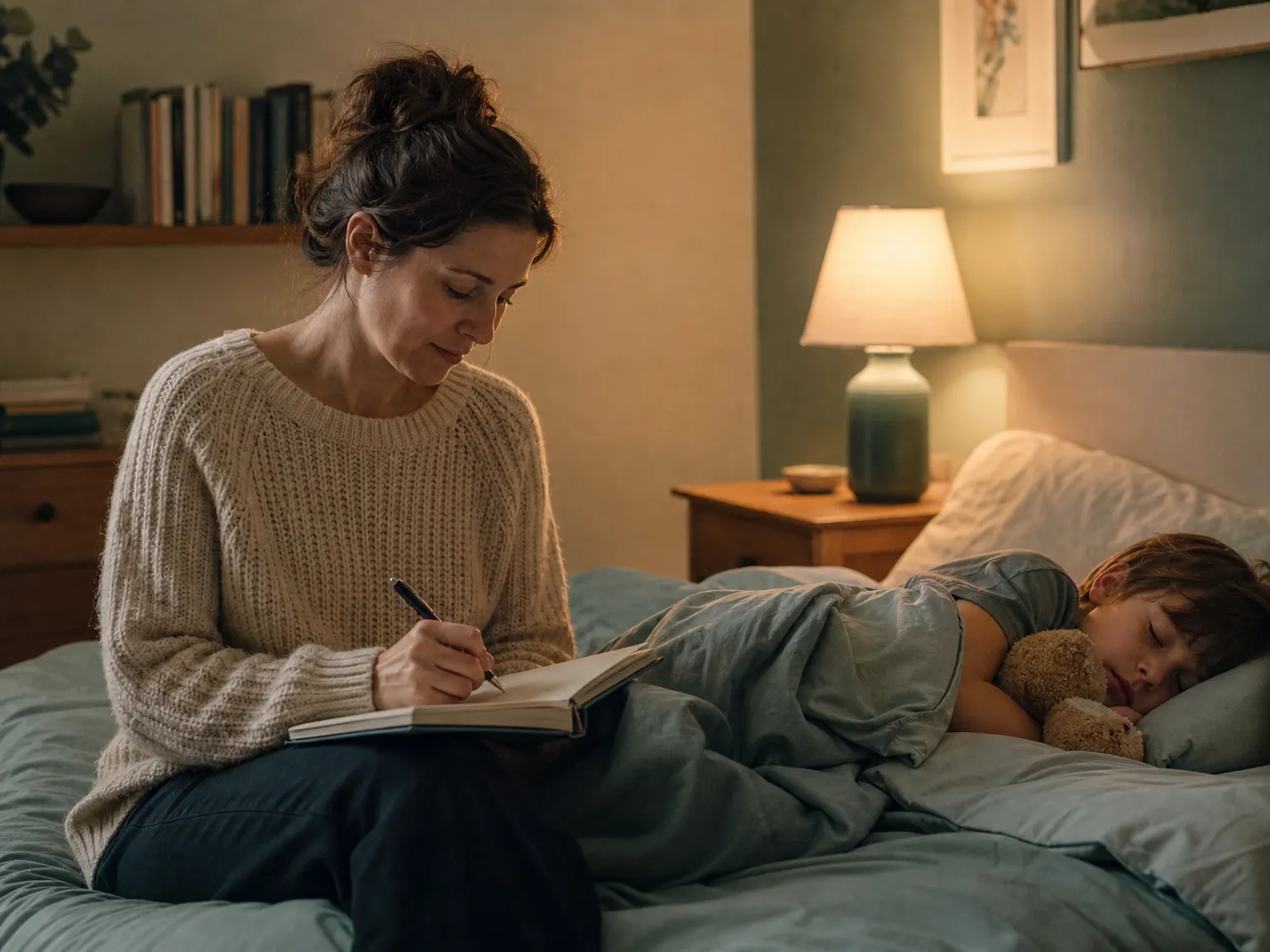
Use a notebook or a simple phone note. Start with what you already know, then add observations you happen to make while waiting for advice. You do not need to stay awake all night, collect a week’s evidence, or delay calling until you have a complete record.
- Describe the pattern. Write down which nights you heard snoring and whether this is new or has been happening for a while. “I heard it on several nights this week” is more useful than guessing how many hours it lasted.
- Describe breathing separately from sound. Did you hear a gasp or see a pause? Did breathing look effortful? If you are unsure, write “unsure” instead of trying to label it apnea.
- Note sleep and daytime changes. Include repeated waking, unusual sleeping positions, morning tiredness, or changes in attention that you or a teacher have noticed. These are among the features described by GOSH.
- Add medical context. Tell the clinician about current illness, medicines, and known conditions. The AAP identifies Down syndrome, cerebral palsy, craniofacial differences, and overweight or obesity among factors associated with higher risk. A child does not need one of these factors to warrant evaluation.
A useful note might read:
“Snoring heard on Monday, Tuesday, and Thursday. On Thursday I heard a gasp after a quiet interval; I could not tell whether breathing stopped. Hard to wake for school this week. No color change noticed. What should we do next?”
This is an example of a report, not a diagnostic checklist. A quiet interval is not automatically a breathing pause, and not noticing a symptom does not rule it out.
How can I talk to my child without frightening them?
Choose a calm daytime moment. You can explain the appointment without asking your child to monitor their own breathing:
Parent: “I’ve noticed some noisy breathing while you sleep. We’re going to ask the doctor to check it.”
Child: “Did I do something wrong?”
Parent: “No. You aren’t doing it on purpose, and you don’t need to fix it yourself. You can tell the doctor how mornings feel.”
For a toddler or preschooler, keep the explanation short: “The doctor will help us check how you breathe at night.” An older child can describe whether they feel rested or have trouble concentrating, without being expected to explain the cause.
If your child shrugs, changes the subject, or refuses to discuss it, use your own observations and speak to the clinician privately if needed. Do not turn the conversation into repeated questioning. GOSH notes that children may not remember the brief awakenings, so “I slept fine” does not cancel what you observed.
What might happen at an evaluation?
The clinician will examine your child and decide whether further assessment is needed. The AAP describes an overnight sleep study, also called a polysomnogram, that monitors breathing, oxygen levels, and brain activity. Referral may involve an ear, nose, and throat specialist or a clinician with expertise in pediatric sleep.
Ask: “Is a sleep study appropriate?”, “What changes should make us seek help sooner?”, and “Who should we contact while we wait?” If testing is recommended, ask the service how to prepare your child, especially if unfamiliar rooms or sensors are difficult for them.
Treatment depends on the findings. GOSH describes several options, including removal of enlarged tonsils or adenoids and positive airway pressure through a mask. An evaluation does not automatically mean surgery. Follow-up matters because, as the AAP explains, symptoms do not always resolve after an operation.
What about babies and bedtime routines?
Do not apply this guide’s observation approach to unexplained breathing pauses in a baby. The AAP distinguishes early infancy’s periodic breathing from sleep apnea, but that distinction should not become a home diagnosis. Contact your baby’s clinician about concerning breathing and use the emergency guidance above when needed.
For older children, keep familiar bedtime steps while you arrange care, but do not treat a calmer bedtime as evidence that a breathing problem has resolved. A story, routine chart, or child’s willingness to cooperate cannot determine whether their airway needs assessment. Your job is to notice, describe, and seek help—not to make your child stop snoring through effort.
Sources
- American Academy of Pediatrics, HealthyChildren.org. Sleep Apnea in Children: Detection & Treatment. Pediatric symptoms, emergency signs, infant context, risk factors, evaluation, and treatment follow-up.
- Great Ormond Street Hospital. Obstructive sleep apnoea. Childhood airway obstruction, nighttime and daytime signs, pediatric sleep studies, and treatment options.
- NHS. Sleep apnoea. General recognition of breathing pauses, gasping, choking sounds, and snoring; adult thresholds and treatment advice were not used for this children’s guide.
This article is for general information and isn’t medical advice. If you’re worried about your child, talk to your pediatrician.

Blub Editorial Team
The Blub Editorial Team is the team behind Blub Kids’ science podcasts for children. We base our articles on WHO, AAP and other primary sources, and we check AI-assisted drafts against those sources before publishing. We don’t give medical advice.
How we write our guides →

