





My Child Is Constipated or Holds In Poop: What Should I Watch?
Short answer: Watch whether your child’s poop is hard or painful, whether they avoid going, and whether there are new underwear stains—not just how many days pass between poops. Contact their clinician early if you suspect constipation; calm toilet routines, supported feet, and ordinary food and drinks can help alongside treatment. Constipation with blood, vomiting, a swollen belly, constant abdominal pain, or weight loss needs prompt medical attention.
This guide is for parents of children roughly 2–8 years old, from potty training through the early school years. It helps you notice a pattern and describe it to a clinician; it cannot diagnose the cause or choose a medicine dose. For a baby or child under two, ask their clinician for age-specific advice rather than applying this toilet routine or changing feeds yourself.
First, check whether your child needs help now
The National Institute of Diabetes and Digestive and Kidney Diseases (NIDDK) advises seeing a doctor right away when constipation occurs with rectal bleeding or blood in the stool, bloating, constant abdominal pain, vomiting, or weight loss. If any of these are present, seek prompt medical advice rather than waiting to complete a diary or try dietary changes. Use urgent medical services if your child is severely unwell.
A hard stool can cause a small tear and bleeding, as the American Academy of Pediatrics (AAP) explains. But do not assume that is the explanation for blood you notice; tell the clinician.
Without those warning signs, still arrange an appointment early if you think your child is constipated. The NHS recommends getting help early because constipation can become harder to treat over time. NIDDK specifically recommends a doctor visit for symptoms lasting more than two weeks or not improving with home treatment. That is a reason to seek care, not a requirement to wait two weeks while your child hurts.
What to watch besides the calendar
Children’s usual bowel patterns differ. The AAP emphasizes stool softness, so a daily poop does not settle the question if it is hard, painful, or accompanied by soiling. Look for the following patterns, described by NIDDK and the NHS:
| What you notice | What to record or mention |
|---|---|
| Hard little pellets or a large, hard stool | Texture and whether passing it hurt |
| Fewer bowel movements than usual | When your child last passed stool and how their pattern changed |
| Tiptoeing, rocking, or tightly clenching the bottom | When it happens, including during play or before leaving home |
| Stains or runny poop in underwear | Whether it happens alongside hard stools or avoiding the toilet |
| Belly discomfort or a reduced appetite | Whether discomfort comes and goes, improves after pooping, or is constant |
| New daytime or nighttime wetting | When it started and any other bowel changes |
Some movements that look like straining can actually be attempts to hold poop in. Withholding can follow a painful poop, reluctance to stop playing, potty-training pressure, or worries about school toilets. When stool stays in the colon longer, more water is absorbed from it, making it harder to pass. This can keep the pain-and-avoidance cycle going, according to NIDDK.
Runny stool is also not always evidence that constipation has cleared. The NHS explains that liquid stool can leak around a hard buildup in children over one, producing overflow soiling. A clinician needs to assess the pattern; do not decide from a stain alone that your child has diarrhea or is deliberately making a mess.
Make a small record you can actually use
Use a notebook or a private note on your phone. Start now and bring whatever you have to the appointment; collecting information should not delay care. Record:
- Poop: when it happened and whether it was soft, pellet-like, or large and hard.
- Comfort: what your child said about pain and any blood you noticed.
- Avoidance or accidents: holding movements, underwear stains, wetting, or refusing a particular toilet.
- Context: appetite changes, usual drinks and foods, and any medicines or supplements.
For example: “After breakfast: stood on tiptoes and said the toilet would hurt. Later: a few hard pellets, cried while passing them. Small stain after school.” This is an example of useful wording, not a diagnostic checklist.
Ask once in a neutral voice rather than questioning your child repeatedly. Keep the record private, especially for an older child who feels embarrassed. NIDDK lists some medicines and supplements, including iron, as possible contributors; tell the clinician what your child takes, but do not stop prescribed treatment on your own.
Offer a predictable, comfortable toilet opportunity
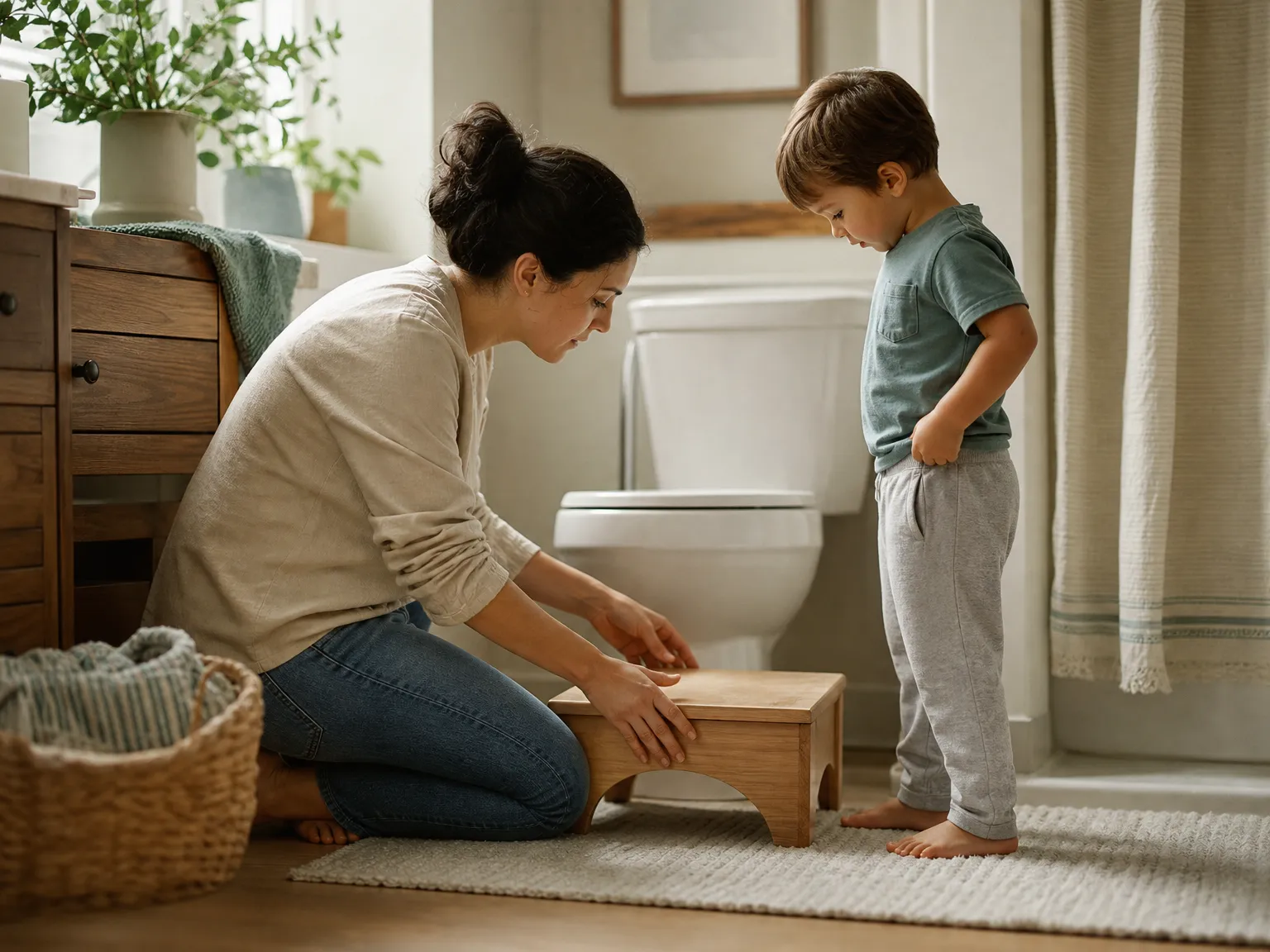
For a child already using the potty or toilet, try a calm opportunity after a meal. The NHS recommends regular sitting, feet supported on the floor or a step, and praise whether or not a child poops. Choose a stable potty or secure toilet setup where feet do not dangle.
At home, that might sound like: “Breakfast is finished. Let’s give your body a chance to poop, then your blocks will still be here.” Keep the invitation brief and relaxed. Avoid turning it into a demand to produce a bowel movement before the child can leave.
If your child says, “It hurts. I’m not going,” try: “I believe you. We won’t force it out. We’ll ask the doctor to help make pooping comfortable.” Praise telling you about pain or trying the routine, rather than making approval depend on a clean pair of pants.
Adapt the approach to the situation:
- Potty-training children: avoid pushing for progress through pain. Ask the clinician how to fit training around constipation treatment; repeated reminders cannot replace addressing painful stools.
- Preschoolers: offer a simple choice, such as the potty or a supported toilet seat, and reassurance that their play can continue afterward.
- School-age children: ask privately about access, privacy, and worries at school. Agree with the child on what to tell a teacher or school nurse so they can use the bathroom when needed.
If your child will not sit, end the argument. Later, ask whether the problem is pain, an uncomfortable seat, the flush, or being away from home. Address what you can and tell the clinician about persistent fear or refusal. The AAP describes both pain-related withholding and avoidance of toilets away from home; the answer is not to label the child stubborn.
Support meals and drinks without making them the whole treatment
Offer regular drinks and a varied diet with fiber-containing foods, such as fruit, vegetables, beans, and whole grains, in forms your child can safely eat. Keep ordinary active play in the day. These fit the NHS’s supportive advice, but they are not a guaranteed cure.
The AAP cautions that extra water alone is not an effective constipation treatment. Avoid turning every meal into a negotiation over a “poop food.” If vegetables are already a source of conflict, our guide to offering vegetables without pressure gives practical mealtime options; it does not replace constipation care.
Ask for a treatment plan and a follow-up point
Some children need medicine to soften stool; some need a clinician-directed treatment to clear a buildup before ongoing treatment. The AAP recommends discussing treatments with your child’s doctor before starting, including medicines sold without a prescription. Do not improvise a laxative dose, suppository, enema, or home cleanout from internet instructions.
Bring your notes and ask: “Could there be a buildup? What exactly should we give, for how long, and when should we call if pain or soiling continues?” Ask for the plan in writing, including what improvement should look like and when to follow up.
The NHS notes that treatment can take months, and overflow soiling may initially get worse during laxative treatment. Ask what to expect for your child, and report persistent or worsening symptoms rather than assuming every change is normal. Follow the agreed plan instead of stopping medicine after one comfortable poop. The aim is comfortable, ongoing bowel movements and less fear—not winning today’s toilet attempt.
Sources
- American Academy of Pediatrics, HealthyChildren.org: Constipation in Children — stool softness, withholding, treatment discussions, and ongoing care.
- NIDDK: Symptoms & Causes of Constipation in Children — symptoms, withholding mechanisms, possible contributors, and when to seek medical help.
- NHS: Constipation in children — overflow soiling, early assessment, toilet routines, and support during treatment.

Blub Editorial Team
The Blub Editorial Team is the team behind Blub Kids’ science podcasts for children. We base our articles on WHO, AAP and other primary sources, and we check AI-assisted drafts against those sources before publishing. We don’t give medical advice.
How we write our guides →

