





My Child Does Not Seem Athletic: How Can I Encourage Movement?
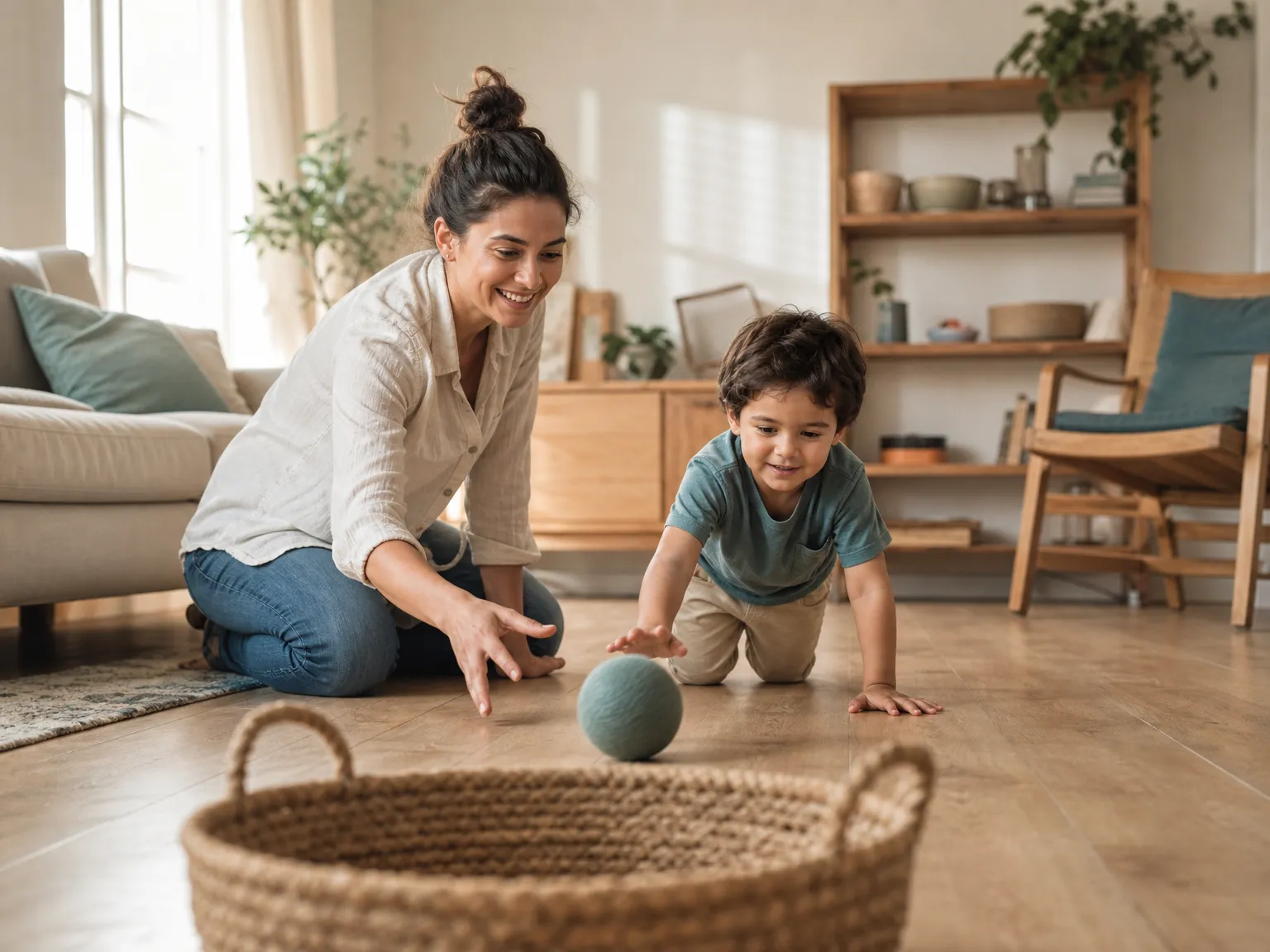
Short answer: Start with movement your child enjoys, without requiring a team, a score, or proof of talent. Offer two small choices, join in, and adjust the activity so they can take part comfortably. Disliking sports does not establish a lack of ability; if movement hurts or you are concerned about what your child can manage, speak with their pediatrician.
This guide is for parents of children roughly 3–10 who avoid sports lessons, hang back during ball games, or say, “I’m bad at everything.” Your first task is to discover an activity they would willingly try again. Signing up for another class can wait.
Find out what “I hate sports” means
Ask away from the lesson, when neither of you is trying to get out the door: “Which part don’t you like?” If that is too broad, offer possibilities: “Is it the game, the noise, waiting for a turn, or people watching?” Leave room for “I don’t know.”
The answer changes what you try next. A child who dislikes fast balls might enjoy dancing. A child who loves chasing you but freezes during soccer practice might prefer play without an audience. If someone laughs at mistakes or excludes them, address that with the adult responsible rather than prescribing more practice.
Avoid turning today’s difficulty into an identity: “You’re just not sporty.” The American Academy of Pediatrics (AAP) explains that sports readiness includes physical, mental, and social skills, and children develop at different rates. A particular class can be a poor fit without telling you what your child will enjoy later.
You might say:
“Catching that ball felt hard today.”
“Everyone else can do it.”
“You didn’t like being watched while you learned. Would you rather roll a ball with me at home, or leave balls for now and take a walk?”
Try one small invitation today
The following is a suggested family experiment, not a prescribed exercise session. Set aside about five minutes, with permission to finish sooner. You need a soft ball, a wide basket, and a clear, level floor away from stairs and sharp furniture. Choose comfortable clothing and a surface where your child will not slip.
- Offer two real choices. “Would you like to roll the ball into the basket or do a follow-the-leader walk?” Accept the answer; do not make both options lead back to the sport they refused.
- Make the first version straightforward. Put the basket close enough that rolling the ball into it is manageable. For follow-the-leader, walk around the room and let your child choose the route. Seated rolling is also an option.
- Join as a partner. Take turns retrieving the ball or following each other. Avoid correcting every movement. The AAP’s guidance on encouraging physical activity emphasizes fun, playing together, and developmentally appropriate activities.
- Change one feature if needed. Move the basket nearer, remove the target, or let the child roll toward you. If they want more challenge, ask whether to move it farther away. Keep scores out unless your child wants them and remains comfortable.
- Ask what to keep. “Same game another day, a different version, or something else?” Their answer is useful information, even if it is “something else.”
Notice a specific action without ranking them: “You moved closer when it was tricky,” or “We kept that ball moving together.” There is no need to announce that they are secretly an athlete.
Build around an interest they already have
You do not need specialist equipment to test what appeals. Choose an invitation connected to something your child already likes:
- Pretend play: walk around the room delivering imaginary parcels to toy animals. Let your child choose the destinations.
- Music: take turns inventing a movement during a favorite song. They can choose seated arm movements, steps, or a mixture.
- Nature: walk to look for different leaf shapes, with a route and pace your child can manage.
- Making things: arrange a simple walking route around spaced cardboard boxes. Keep the floor clear between them; there is no need to climb or jump over objects.
- Company: invite one kind friend for playground play instead of joining a large competitive group.
These are ways to explore preferences, not promises of a particular developmental result. Ask “Which part did you like?” rather than “Did you get enough exercise?” Keep any activity that works, even if it looks different from the sport you imagined sharing.
Match the invitation to age and readiness
Ages 3–5: Favor copying, exploring, and simple play. Show a movement instead of explaining a long sequence. The AAP’s sports-readiness guidance says most children under six are not ready for organized sports and recommends basic movement skills through active play, without competition. Reluctance to follow team rules at this age is not a useful test of athletic potential.
Ages 6–9: Try simple games with flexible rules, smaller equipment, and frequent turns. For example, roll a larger soft ball before attempting catches, or play with one partner rather than a full team. The same AAP guidance recommends adapting sports to children’s skills and emphasizing learning over winning.
Around age 10: Give your child more say in the activity and setting. Ask whether they want independent practice, a friend, or a beginner group. Some children are ready for more complex sports at this age, but readiness is not an obligation to compete. Check that a class welcomes beginners and offers meaningful participation.
Across these ages, use your child’s abilities and comfort alongside their age. For a child with a disability or health condition, ask their clinician for suitable adaptations when needed rather than assuming the standard version is the only option.
Let a small start grow into everyday movement
Five minutes is an opening invitation, not a complete daily activity target. The CDC’s age-specific guidance recommends activity throughout the day for ages 3–5. For ages 6–17, it recommends at least 60 minutes of moderate-to-vigorous activity daily, mostly aerobic, including vigorous activity and muscle- and bone-strengthening activity on at least three days each week.
That guidance does not require joining a sports team. Think about the whole day: active play, walking, dancing, playground time, and school activity. A gentle basket-rolling game can help you find an enjoyable starting point, but it will not necessarily provide the intensity described in the guidance.
Once you find something your child likes, make space for it in an ordinary part of the day, such as a walk after school or dancing before dinner. Offer opportunities and variety without turning every outing into a minute-counting exercise.
If your child refuses everything
Pause the invitation instead of increasing the persuasion. Try: “You don’t want a game now. I’m going for a short walk later; you can help choose the route.” Another day, offer a familiar activity with fewer demands: no audience, no timer, no target, and no comparison with siblings.
If classes repeatedly end in distress, stop signing up while you investigate. Ask whether the issue is discomfort, difficulty following instructions, an unkind group, or simply the activity itself. A trial visit or watching a session together can help when your child wants to explore another class. The AAP recommends observing programs and looking for children having fun.
Keep ordinary opportunities to move available, but do not require a performance to earn your approval. You can enjoy moving together without making sports enthusiasm the measure of success.
When to ask for help
Do not treat pain as reluctance to overcome. The AAP advises that physical activity should not hurt. Stop the painful activity and discuss recurring pain or concerns about movement with your child’s pediatrician. Their doctor can help identify appropriate activities and whether further assessment is needed.
Also bring specific observations if ordinary play seems persistently difficult: what your child was doing, what happened, and whether the same difficulty appears outside sports. You do not need to diagnose the cause before asking for advice. If fear of ridicule is the barrier, speak with the school or activity leader; persistent distress also deserves professional support.
For today, choose one comfortable invitation and listen to the response. “I’d like to do that again” is a useful next step, whether it comes after a dance, a walk, or rolling a ball together.
Sources
- American Academy of Pediatrics, HealthyChildren.org: Is Your Child Ready for Sports? — age-specific readiness, adapted rules, participation, and choosing a program.
- American Academy of Pediatrics, HealthyChildren.org: 11 Ways to Encourage Your Child to Be Physically Active — enjoyable family activity, safe settings, appropriate activities, and pain limits.
- Centers for Disease Control and Prevention: Child Activity: An Overview — activity recommendations for ages 3–5 and 6–17, including intensity and activity types.

Blub Editorial Team
The Blub Editorial Team is the team behind Blub Kids’ science podcasts for children. We base our articles on WHO, AAP and other primary sources, and we check AI-assisted drafts against those sources before publishing. We don’t give medical advice.
How we write our guides →

