





Is It a Nightmare or a Night Terror? How Can I Tell?
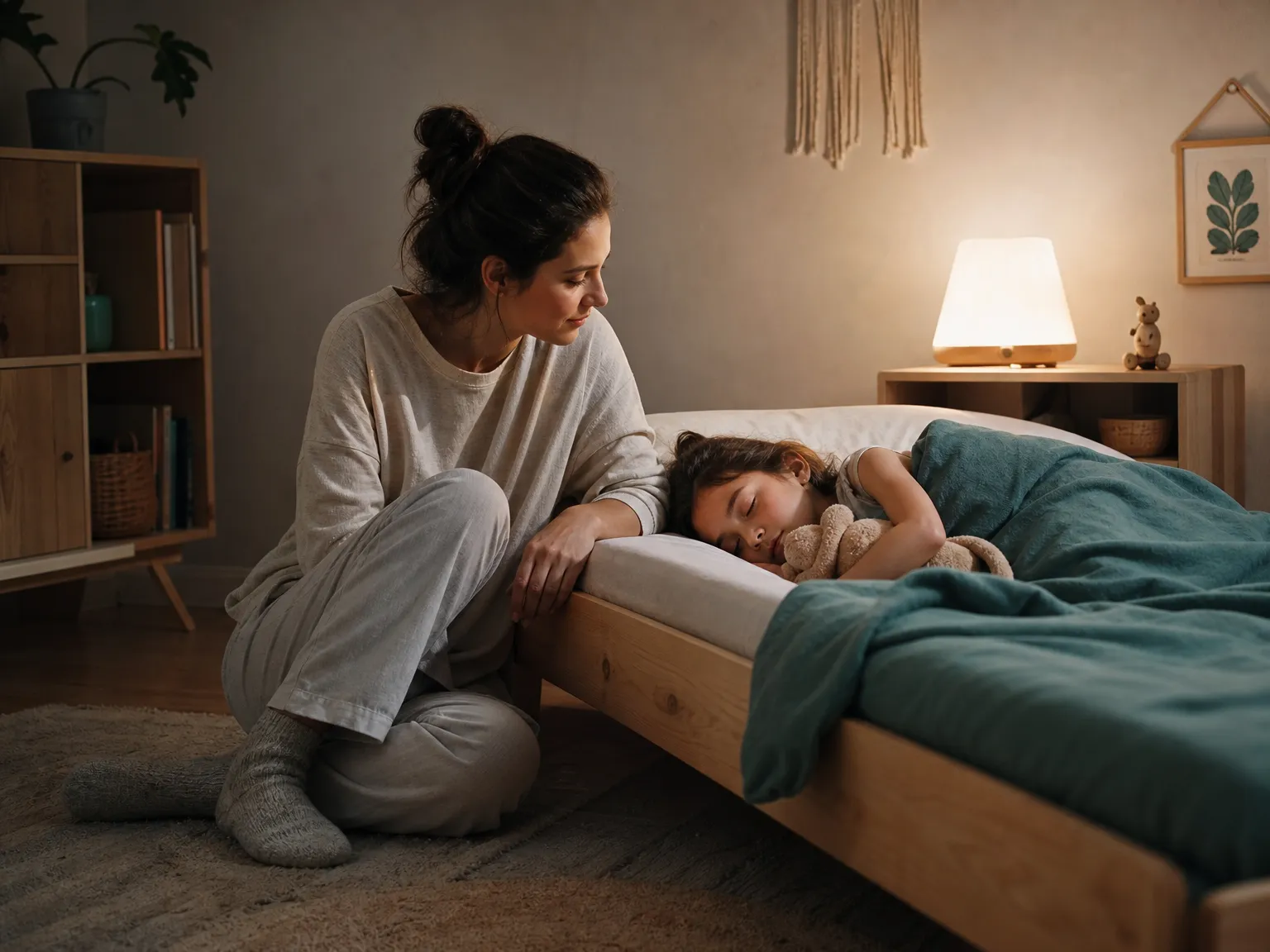
Short answer: After a nightmare, your child wakes up, can usually recognize you, and may remember a frightening dream. During a night terror, they may scream or look wide awake but remain asleep, fail to recognize you, and usually remember nothing afterward. Comfort a child who has woken from a nightmare; during a suspected night terror, stay nearby, protect them from injury, and avoid trying to wake them. These are clues, not a diagnosis: repeated, unusual, or unsafe episodes deserve medical advice.
This guide is for parents of children around 3–8 years old, not for interpreting infant crying. The NHS identifies this as a common age range for night terrors in children. A scream alone cannot tell you which kind of episode you are seeing. What happens when you approach, when in the night it occurs, and what your child remembers together give a more useful picture.
Look for a pattern, not one telltale sign
The American Academy of Pediatrics (AAP) describes nightmares as frightening dreams that often occur in the second half of the night. Night terrors happen during deep sleep, usually earlier in the night. Open eyes do not necessarily mean your child is awake.
| What you notice | More consistent with a nightmare | More consistent with a night terror |
|---|---|---|
| Timing | Often later in the night | Often in the first few hours after falling asleep |
| Connection with you | Wakes, recognizes you, can respond | Seems confused, looks through you, may push you away |
| What happens | May describe a frightening dream and seek comfort | May scream, sweat, thrash, or get out of bed while still asleep |
| Afterward | May remember the dream and struggle to settle | Usually returns to sleep and has little or no memory in the morning |
| Your immediate role | Reassure and comfort | Watch calmly and prevent injury |
These distinctions are supported by the Royal Children’s Hospital Melbourne (RCH) and the AAP. They are not a home diagnostic test. A young child might lack the words to describe a nightmare, and timing alone cannot identify an episode. You do not need to quiz your child or deliberately wake them to fill in the table.
For example, a child who wakes near morning, reaches for you, and says a dog chased them in a dream fits the nightmare pattern. A child who screams soon after falling asleep, stares past you, resists a cuddle, and then settles without waking fits the night-terror pattern. These are illustrative situations; tell a clinician if what you see does not fit or concerns you.
If your child has woken from a nightmare
The AAP’s nightmare guidance recommends going to your child, reassuring them, and helping them return to sleep when ready. Try this sequence:
- Reconnect. Approach quietly and let your child know who is there. Offer a cuddle if they want one.
- Name the experience. Acknowledge that the dream felt frightening while explaining that it was a dream.
- Make one small adjustment. A dim light or moving an object that casts a worrying shadow may help.
- Return to rest. Listen if they want to talk, then encourage sleep when they feel ready. Save a longer conversation for daytime.
An example exchange:
Child: “The dog is coming back.”
Parent: “That dream felt scary. You’re awake now, in your room, and I’m here.”
Child: “Don’t go.”
Parent: “I’ll sit beside you for a little while. Would you like the small light on?”
You do not have to persuade your child to stop feeling afraid immediately. If they do not want to describe the dream, try: “You don’t have to tell me. We can sit quietly.” Comfort does not depend on getting the story out of them. If touch is unwelcome, stay close without insisting on a hug.
If it looks like a night terror
A child who cannot recognize you may become more upset when you try harder to comfort them. Both the NHS and RCH advise a calm response and avoiding attempts to wake the child.
- Stay nearby and check the surroundings. Move hard toys or other hazards out of the way. Watch for movement toward stairs, windows, or furniture edges.
- Keep interaction minimal. Avoid shaking, calling repeatedly, questioning, or trying to make eye contact. Do not hold your child still unless intervention is needed to prevent injury.
- Protect without wrestling. If they move toward a hazard, intervene as gently as possible to keep them safe. Seek medical advice if episodes are too violent to manage safely.
- Allow the episode to settle. When they return to quiet sleep, do not wake them for an explanation. Note what happened afterward.
Not responding to your comfort during a night terror is not rejection or disobedience. It is part of the sleep state described by these sources. During the episode, a conversation may not be possible; your useful job is to remain present and keep the space safe.
Tell babysitters or other overnight caregivers what you have observed and share the same response plan. The AAP specifically recommends preparing caregivers when a child has night terrors.
What to change the following day
Overtiredness can make night terrors more frequent, according to RCH. Keep bedtime regular and use a manageable wind-down sequence, such as washing, teeth, a familiar book, and bed. This supports sleep; it does not guarantee that an episode will stop.
Before bedtime, clear the floor and check that windows and outside doors are secure. Address access to stairs if your child gets up. Do this preparation during the day, rather than trying to rearrange the room during an episode.
Adjust the conversation to your child:
- Ages 3–5: After a remembered nightmare, use short, concrete reassurance and one choice, such as a nightlight. Do not expect a detailed account.
- Ages 6–8: If they remember a bad dream, offer a daytime conversation about anything worrying them. Let them help choose what would feel reassuring at bedtime.
- At either age: If they remember nothing, avoid retelling the night terror dramatically. RCH advises against making a fuss the next day because the reaction can make children anxious about bedtime.
If your child does not engage, leave the conversation open: “You can tell me later if you want.” You can still make the room safe and keep the routine steady.
Keep a short record if episodes recur
The NHS recommends a sleep diary to help identify patterns. Use a notebook or a brief note on your phone after your child is settled:
- Approximate time they fell asleep and when the episode began.
- What you actually saw: words, movements, response to you, and approximate duration.
- Whether they remembered anything spontaneously the next morning.
- Illness, a disrupted schedule, and how sleepy they seemed the next day.
Write “eyes open, pushed my hand away” rather than “definitely a night terror.” Observations give a clinician more useful information than a label. You do not need a complete diary before asking for help.
When should I call the doctor?
Ask your child’s doctor if episodes keep happening, disrupt family sleep, create an injury risk, or leave your child very sleepy during the day. These are reasons for review in the AAP and RCH guidance.
The NHS also advises review for frequent nightmares or those linked to a frightening event, nightmares continuing after age six, night terrors starting after age five, or night terrors continuing after age twelve. These thresholds are reasons to discuss the pattern, not proof that something serious is wrong. Bring new or unusual episodes to a clinician rather than assuming they are night terrors.
Get emergency help for breathing difficulty, blue or gray lips or skin, or a child who becomes limp or floppy. Call your local emergency number. These signs are covered in the NHS emergency guidance for children and should not be dismissed as a sleep episode. The advice to avoid waking a child during a typical night terror does not mean ignoring signs of a medical emergency.
Tonight, focus on one distinction: a child who is awake and frightened needs reassurance; a child having a suspected night terror needs calm supervision and protection. If you cannot tell, record what you see and ask for medical advice rather than forcing an answer in the middle of the night.
Sources
- American Academy of Pediatrics: Nightmares, Night Terrors & Sleepwalking in Children: How Parents Can Help — timing, recognition, recall, and caregiver responses.
- NHS: Night terrors and nightmares — distinguishing features, sleep diaries, and reasons to seek medical advice.
- Royal Children’s Hospital Melbourne: Night terrors (night-time wakings) — childhood signs, safety, routines, and referral concerns. The page notes that it is awaiting routine review; the central response advice also agrees with the AAP and NHS pages above.
- NHS: Shortness of breath — emergency signs specifically listed for children.
This article is for general information and isn’t medical advice. If you’re worried about your child, talk to your pediatrician.

Blub Editorial Team
The Blub Editorial Team is the team behind Blub Kids’ science podcasts for children. We base our articles on WHO, AAP and other primary sources, and we check AI-assisted drafts against those sources before publishing. We don’t give medical advice.
How we write our guides →

