





I Yelled at My Child: How Can I Repair the Relationship?
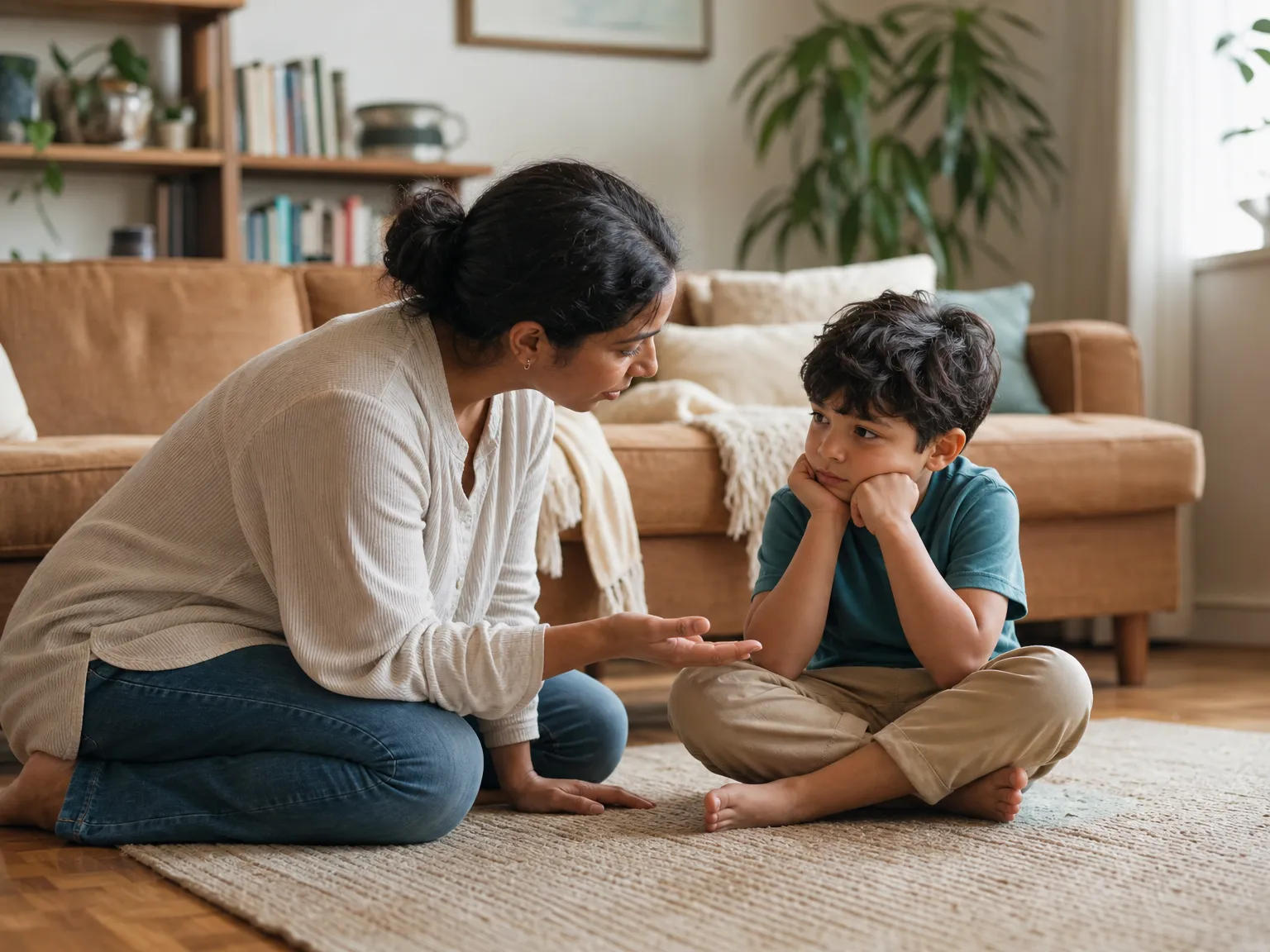
Short answer: Calm yourself first, then tell your child plainly that you yelled and that it was your responsibility. Apologize without blaming them, listen to how it felt for them, and say what you will do differently next time. Keep any necessary safety limit, but give your child time if they do not want to talk or hug. If yelling is frequent, frightening, or you worry you may hurt your child, get support rather than relying on another apology.
You may be replaying the moment: the loud voice, your child’s face, the silence afterward. A repair starts with what you can control now. This guide is for parents of roughly 2- to 12-year-olds after a verbal outburst. It is not a script that makes a child forgive you, and a single apology cannot undo a pattern of intimidation. The American Academy of Pediatrics (AAP) advises parents who lose their temper to cool down, apologize, explain how they will handle the situation in the future, and keep that promise. It also warns that harsh verbal discipline can harm children.
First, make the next conversation safe
If your voice is still rising, postpone the explanation. Make sure your child is in a safe place, then take a few minutes to breathe, get water, or ask another trusted adult to take over. Say, “I need a moment to calm down. I will come back and talk with you.” Return when you said you would. The AAP explicitly suggests a parent take a brief time-out when they feel out of control, provided the child is safe.
If you threatened to hurt your child, grabbed or hit them, or fear you might, move them to safety with another trusted adult and seek immediate local crisis or emergency help. An apology comes after safety. Do not leave a young child alone or ask them to manage your anger for you.
Apologize for your action, without an excuse
Get near enough to speak normally, but let your child choose whether to come closer. Use a few specific sentences:
“I yelled when we were getting ready to leave. That was scary and unfair. I am sorry I yelled. It was my job to speak to you respectfully. Next time I will pause and use a quieter voice.”
Change “scary” if your child did not experience it that way; you can say, “You may have felt upset or frightened.” Avoid “I am sorry, but you would not listen.” The word but can turn your apology into an argument about your child’s behavior. You can discuss that behavior separately. Equally, avoid asking your child to reassure you with “I’m a terrible parent, aren’t I?” They do not need to carry your guilt.
The specific next step matters. “I will never get angry again” is a promise you cannot safely make. “I will step into the kitchen for a minute after making sure you’re safe” is something you can practice. The AAP emphasizes explaining the future change and following through. UNICEF’s positive parenting guide pairs clear boundaries with calm, respectful communication rather than shouting or shame.
Make room for the child’s answer
After the apology, stop talking for a moment. You might ask, “What was that like for you?” or “Is there something you want me to know?” Listen without correcting their account of how it felt. If they say, “You scared me,” try “I hear that I scared you. I’m sorry.” You do not need to agree with every detail of an argument to acknowledge their experience.
Do not demand “It’s okay,” forgiveness, eye contact, or a hug. A child may want closeness, or may want distance; ask before touching: “Would you like a hug, or some space?” If they say “Go away,” respect a safe amount of space and say when you will check back: “Okay. I’ll be in the next room. I’ll check in after dinner.” Keep ordinary care going in the meantime. A quiet offer to read, draw, or sit nearby later can be enough to reopen conversation. UNICEF’s guidance for ages 0–5 recommends listening, acknowledging feelings, and offering a hug rather than forcing a response; its age examples apply to younger children, so use older children’s own words and preferences as the guide.
If your child says nothing, do not turn the apology into a speech. One clear apology and a later, low-pressure invitation to talk give them a choice. Notice their behavior over the following days without trying to extract proof that the relationship is “fixed.”
Keep the boundary, change the delivery
You may have yelled about something that still needs attention: a child ran toward the road, hit a sibling, or refused to leave the playground. Taking responsibility for yelling does not mean withdrawing a safety rule. Separate the two messages:
Parent: “I yelled when you ran toward the street. I’m sorry I yelled. I was scared, and I should have spoken clearly.”
Child: “You were so loud.”
Parent: “You’re right. Next time I will come close and say, ‘Stop. Hold my hand.’ We still have to stop at the curb.”
There may be a moment when a loud “Stop!” is needed to interrupt immediate danger. That is different from continuing to shout after the child is safe. Once danger has passed, return to a calm explanation. The AAP’s discipline guidance supports clear, consistent limits in words children can understand; UNICEF also describes firm boundaries without fear or humiliation. For a longer guide to everyday directions, see how to set a clear limit when a child does not stop at “no”.
Adjust the repair to your child’s age
Ages 2–3: Keep it very short: “I was loud. I’m sorry. I’ll use my quiet voice.” Offer comfort if welcome, then return to a familiar routine. A toddler may not answer a question about feelings, and you do not need them to repeat your apology back. UNICEF notes that young children are still learning to express feelings and often need calm, simple responses from adults.
Ages 4–6: Name what happened and invite one simple response: “I yelled at cleanup time. I’m sorry. Did that upset you?” If they want to play or draw instead of talking, let that be a way to reconnect. Do not turn their answer into a debate about whether they should have cleaned up. You can restate the cleanup plan later in plain language.
Ages 7–12: Allow more room for their account and a practical change: “I interrupted and raised my voice. What did you want me to hear?” You might agree that next time both of you can pause before revisiting homework or a chore. The adult still owns their yelling. As children grow, the AAP recommends listening to their story and discussing options in difficult situations, while keeping reasonable family expectations.
These are conversation options, not developmental tests. Use fewer words if your child is overwhelmed, communicates differently, or is not ready.
Make a plan for the next hard moment
Later, ask yourself what happened just before you shouted. Were you trying to leave while already late? Repeating directions from another room? Managing two children at once? Pick one change that fits that exact situation. You might set a departure reminder, walk over before giving a direction, or ask another adult to handle the transition when you are flooded. UNICEF’s guidance for young children suggests pausing before reacting and using calm, age-appropriate guidance; the AAP likewise recommends planning ahead for difficult moments and learning from your own mistakes.
Tell your child only the part they need to know: “When I feel my voice getting loud at bedtime, I will stop, take a breath, and come back to give one instruction.” Then do it. A future calm response is more useful than repeating the same apology without changing the situation. If you yell again, acknowledge that incident honestly and revisit the plan; do not ask your child to grade your progress.
When to get more help
Ask a pediatrician, family doctor, or qualified mental health professional for help if yelling is frequent, includes insults or threats, your child seems persistently afraid of you, or you cannot reliably interrupt the pattern. Ask sooner if stress, depression, substance use, or conflict at home makes it hard to keep your child safe. A clinician can help you work through what triggers the outbursts and what support your family needs. The AAP’s warning about harsh verbal discipline is a reason to take a repeated pattern seriously, without assuming that one outburst defines your relationship.
If you think you might physically hurt your child, arrange immediate supervision by a safe adult and contact local emergency or crisis services. Do not wait for a routine appointment. For today, start with a brief, truthful apology; listen or give space; and choose one change you can actually make next time.
Sources
- American Academy of Pediatrics: What’s the Best Way to Discipline My Child? — parent time-out, apology and follow-through, age-appropriate limits, and harms of harsh verbal discipline.
- UNICEF Asia Pacific: Positive parenting vs. strict parenting — respectful communication, clear calm boundaries, and avoiding shouting or shame.
- UNICEF Asia Pacific: Positive parenting tips for babies and children ages 0–5 — young children’s communication and feelings, pausing before reacting, and offering comfort without harsh discipline.

Blub Editorial Team
The Blub Editorial Team is the team behind Blub Kids’ science podcasts for children. We base our articles on WHO, AAP and other primary sources, and we check AI-assisted drafts against those sources before publishing. We don’t give medical advice.
How we write our guides →

